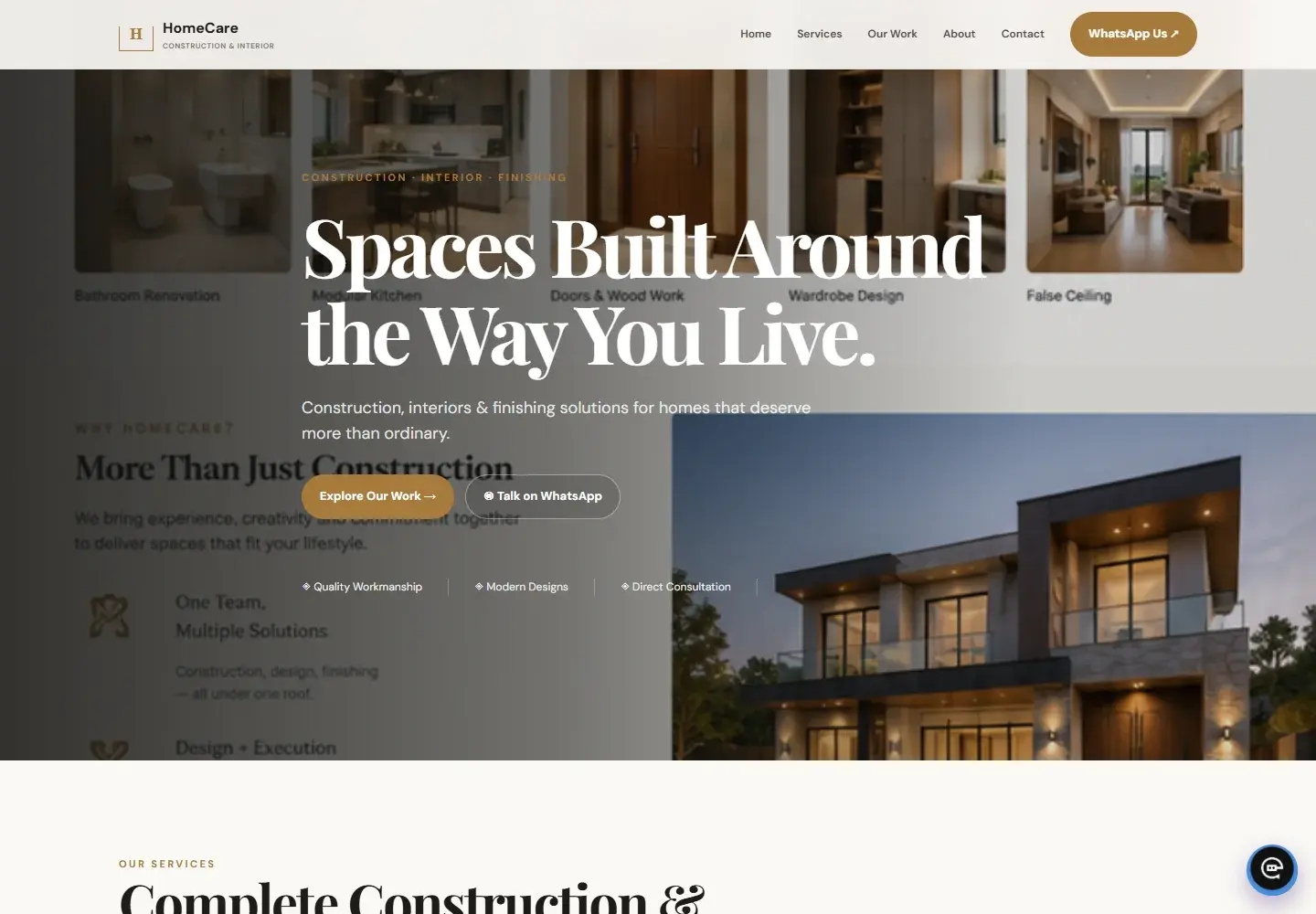
Tell a complete project story.
Before-and-after photography can communicate change, but context matters. Describe the original brief, the rooms involved and the work you delivered. Label photographs accurately and use comparable viewpoints where possible. Do not imply a wider role than the one you actually performed.
Address the uncertainty before the enquiry.
Visitors may not know whether they need a full refurbishment, specialist trades or design support. Explain your scope in everyday language, how an initial assessment works and what can only be established after inspecting the property.
- Room and whole-property service structure
- Before-and-after project narratives
- Process and preparation information
- Location and project-scope enquiry fields
Make the practical questions easy to find.
Working in an occupied property, sequencing trades and agreeing finishes can shape a project. Your website can explain how these topics are discussed without making promises about every job. Specific planning information helps visitors prepare and makes the first call more useful.
Guide each visitor to relevant work.
A kitchen refurbishment visitor should not have to search through unrelated exterior projects. Cross-link services and project stories. Keep the contact action visible after the proof, with an invitation to explain the property and desired outcome. HomeCare provides relevant supplied residential finishing work.
Questions worth asking.
Can we show before-and-after images?
Yes, using images you have permission to publish. We can structure them with accessible labels and project context.
Can the site explain different renovation scopes?
Yes. Separate service and project routes help homeowners understand which parts of a renovation your business takes on.