Define the smallest useful product.
Write down who uses the tool, what starts the workflow and what a successful outcome looks like. A scoped first release makes trade-offs visible. It should solve a complete task rather than offer a large collection of unfinished features.
Map data and permissions early.
Internal tools often involve different roles, sensitive records and existing systems. Agree who owns the data, who can change it and how it is exported. Authentication, permission boundaries and audit requirements belong in the initial scope, not at the end.
- Workflow and interface design
- Business dashboards and internal tools
- Utility platforms and product frontends
- Integration and data-model planning
Make ongoing ownership possible.
Reusable components, clear interfaces and documented setup help the product remain workable after launch. Error states, backups, deployment and monitoring need an owner. Third-party dependencies and recurring operating costs should be understood before expanding the system.
Validate with real tasks.
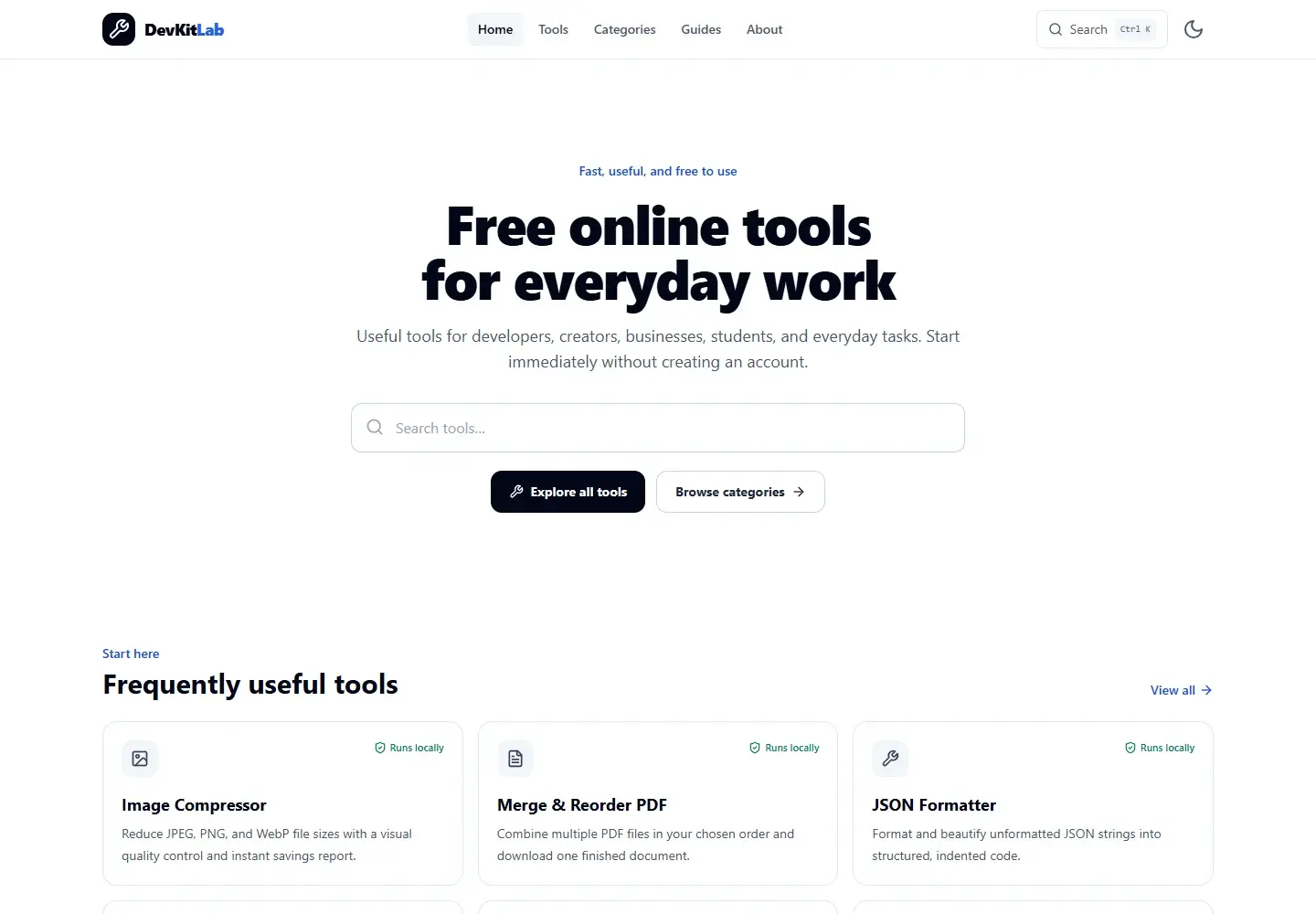
Test the core workflow using representative data and realistic permission levels. Review what happens when inputs are missing or an integration is unavailable. DevKitLab is supplied portfolio work illustrating a task-first utility platform with searchable tool pages.
Questions worth asking.
Do you build SaaS products?
Buildron can scope custom products and SaaS interfaces. Authentication, billing, data handling and operational requirements are established for the specific project.
Should we build or buy?
Use an existing product when it meets the workflow well. A custom build is worth considering when the unmet need is important enough to justify maintenance and ownership.